Репозитарій Національної академії образотворчого мистецтва та архітектури
Особливості реновації історичних житлових утворень (на прикладі площі Старий Ринок)
- Головна сторінка DSpace
- →
- НАОМА
- →
- Факультет архітектури
- →
- Кваліфікаційні роботи другого (магістерського) рівня вищої освіти
- →
- Перегляд матеріалів
JavaScript is disabled for your browser. Some features of this site may not work without it.
Особливості реновації історичних житлових утворень (на прикладі площі Старий Ринок)
Болобан, Костянтин Юрійович; Boloban, Kostiantyn Yuriiovych
Дата:
2026
Короткий опис(реферат):
У вступі розглядається актуальність дослідження, яка полягає в культурному надбанні Львова в історичних районах середмістя. Центральна частина міста є всесвітньою спадщиною ЮНЕСКО, а пам'ятки, які розташовані на території буферних зон, підкреслюють історію міста та створюють цілісний організм. Для захисту пам'яток потрібні заходи охорони, модернізації та реставрації.
Стан дослідженості питання недостатньо висвітлений у наукових дослідженнях. Головною працею є «Звід пам'яток історії та культури України», у якій зібрано цінну інформацію про історичні райони Львова. Також ґрунтовні дослідження маємо в «Архітектурно-історичних нарисах Львова» В. Вуйцика, Б. Черкеса та інші, що зосереджують особливу увагу на картах, розбудові міста. З вивченням історії пам'яток був складений історико-архітектурний опорний план Львова.
Метою дослідження є визначити принципи модернізації та відновлення історичних районів міст (на прикладі площі Старий Ринок у Львові).
Завдання дослідження: визначити стан дослідженості, розглянути історико-культурну цінність районів середмістя, визначити типологічні особливості історичних районів середмістя Львова, визначити поняття модернізації, відновлення та регенерації і розкрити їхню сутність, визначити роль і місце історичних районів у формуванні історичного середовища у створенні буферної зони ансамблю історичного центру Львова, розкрити історико-культурну сутність площі Старий Ринок, дослідити історію та стан збереженості забудови площі, визначити сутність та особливості регенерації площі, розкрити методику відновлення будівель на площі Старий Ринок, розкрити принципи компенсаційної забудови.
Об’єкт дослідження - Історичні житлові утворення Старого Ринку Львову.
Предмет дослідження - Особливості реновації історичних житлових утворень
Використано різноманітні методи дослідження, такі як: синтез, аналіз, аналогія, індукція, спостереження, порівняння, експеримент, моделювання, декомпозиція, типологічної класифікації тощо.
Наукова новизна отриманих результатів полягає у тому, що було ретельно розглянуто та висвітлено комплексні методи вивчення та основи модернізації та відновлення історичних районів у центральних частинах Львову. У результаті дослідження було розроблено конкретний алгоритм для проведення реставрації та модернізації будівель на площі Старий Ринок у місті Львові.
Практична значущість отриманих результатів можуть бути використані при регенерації історичних районів та модернізації історичних міських просторів.
Структура дослідження складається зі вступу, трьох розділів, до кожного з яких ідуть загальні висновки, списку літератури та додатків до наукової роботи.
У розділі 1 проаналізовано історичні райони середмістя Львова в різних наукових працях. Багато авторів досліджували певні напрямки такі, як: у «Зводі пам'яток історії та культури України», це видання дає багато корисної інформації розповідаючи про площі та їх забудову. У праці «Архітектурно-історичні нариси Львова» надають матеріали дослідження історії міста та опорного плану Львова. Б. Черкас у монографії «Архітектура Львова» розповідає про розбудову міста історичними будівлями. В. Вуйцик у праці «Пам'ятки архітектури Львова» описує пам'ятки, які знаходяться чи колись були в Львові. У статті М.Р. Ясінського «Зарубіжний досвід реставрації історичних районів та його особливості» автор описує різні підходи до реставрації закордоном. Л.В. Прибєга в праці «Охорона та реставрація об'єктів архітектурно-містобудівної спадщини України» зазначає, що пам'яткоохоронна методика ґрунтується на комплексній сфері діяльності.
У роботі досліджуються типологічні особливості історичних районів Львова. Проаналізовано типологію сакральних споруд, житлових будівель та громадських об'єктів. Розглянуто розташування будівель на площі, висотність та види приміщень, які були притаманні цьому часу.
Розглянуто значення площі в містобудівній забудові Львова. У роботі розглянуто приклад площі Старий Ринок, яка знаходиться в буферній зоні ансамблю історичного центру Львова. Історичні райони утворюють цілісний композиційний просторовий каркас міста. Для підтримки пам'яток всесвітньої спадщини ЮНЕСКО потрібно робити заходи з регенерації історичного середовища міста.
Отже, у визначені стану дослідження виявлено, що історичні райони недостатньо висвітлені в формування середовища Львова.
У розділі 2 визначені принципи модернізації та відновлення історичних районів. Розглянуто поняття модернізації та відновлення. Автор А.В. Мережко «Закордонний досвід модернізації історичних районів» у роботі наводить приклад країн Європи, які мають розвинуте законодавство та інноваційні програми, що стосуються збереженню історичних районів.
Щоб говорити про модернізацію, ми повинні її розглянути в контексті регенерації урбаністичного утворення. Розглянуті заходи регенерації дають основу для модернізації, відновлення, санації та інших методах регенерації.
Дослідивши архітектурно-історичні райони ми можемо визначити методичні засади дослідження.
Отже, виходячи із зарубіжного досвіду, ми маємо розвивати та впроваджувати нові методи регенерації міських просторів для збереження культурного надбання та створення комфортного життєвого середовища.
Розділ 3 присвячений адаптації на прикладі площі Старий Ринок. Розглянуто історію площі та її формування. Зазначені архітектори, які працювали над стилістичним формуванням площі.
Проведені принципи регенерації, модернізації та відновлення історичних районів площі Старий Ринок.
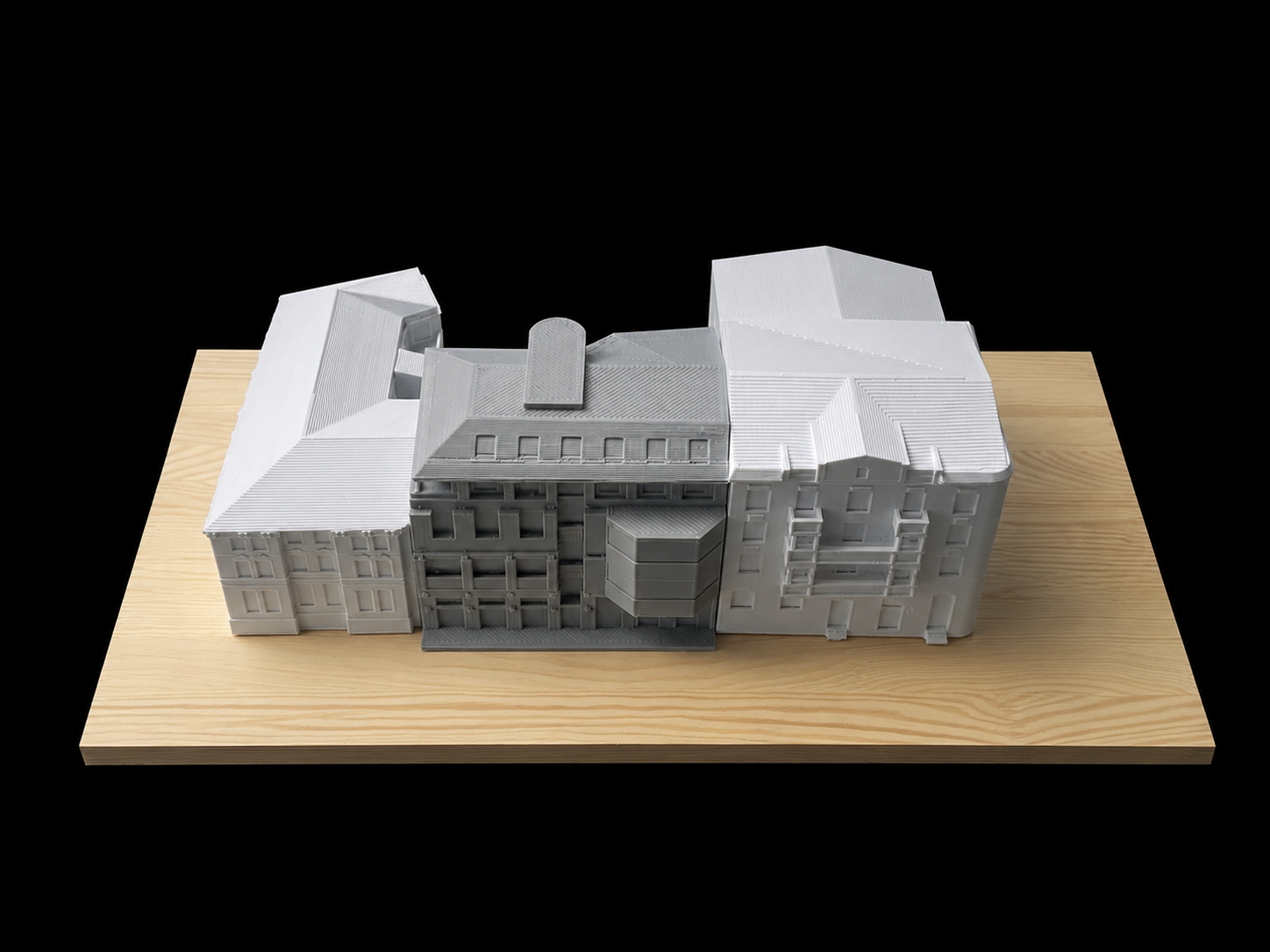
Розроблено концепцію проєкту модернізації історичного району. Показаний приклад модернізації та функціональної адаптації. Створено концепцію музею однієї площі в межах компенсаційної забудови.
Отже, на основі зібраної інформації розробили опорний план площі. Зроблено фотофіксацію та розгортку площі. Дослідили транспортну комунікацію та інфраструктуру. Визначили якими методами будемо користуватися в проєкті. Проведені в тексті дослідження та аналіз дали змогу створити проєкт регенерації площі. Дати їй функцію музею, громадського простору, та зберегти історичні будівлі з покращеними заходами модернізації та відновлення.
The introduction discusses the relevance of the research, which lies in Lviv's cultural heritage in the historical districts of the city center. The central part of the city is a UNESCO World Heritage site, and the monuments located in the buffer zones emphasize the city's history and create a cohesive organism. To protect the monuments, measures for conservation, modernization, and restoration are needed.
The state of investigation of the issue is insufficiently covered in scientific studies. The main work is the "Register of Monuments of History and Culture of Ukraine," which collects valuable information about Lviv's historical districts. There are also thorough studies in "Architectural-Historical Essays of Lviv" by V. Vuicik, B. Cherkes, and others, which focus particular attention on maps and the city's development. The study of the history of monuments led to the compilation of Lviv's historical-architectural reference plan.
The purpose of the study is to determine the principles of modernization and restoration of historical city districts (using the example of Staryi Rynok Square in Lviv).
The task of the study: to determine the state of research, examine the historical and cultural value of city center districts, identify typological features of historical districts in Lviv's city center, define the concepts of modernization, restoration, and regeneration and reveal their essence, determine the role and place of historical districts in forming the historical environment in creating the buffer zone of the ensemble of Lviv's historical center, reveal the historical and cultural essence of Staryi Rynok Square, investigate the history and state of preservation of the square's development, determine the essence and features of the square's regeneration, reveal the methodology for restoring buildings on Staryi Rynok Square, reveal the principles of compensatory development.
Object of research - Historical residential development of Staryi Rynok in Lviv.
The subject of research is the Principles of modernization and restoration of historical districts in Lviv's city center..
Various methods used studies such as: synthesis, analysis, analogy, induction, observation, comparison, experiment, modeling, decomposition, typological classification, etc.
The scientific novelty of the obtained results lies in the fact that comprehensive methods of studying and the foundations of modernization and restoration of historical districts in the central parts of Lviv were thoroughly examined and highlighted. As a result of the research, a specific algorithm was developed for conducting restoration and modernization of buildings on Staryi Rynok Square in the city of Lviv.
The practical significance of the results obtained can be used in the regeneration of historical districts and the modernization of historical urban spaces.
The structure of the study research consists of an introduction, three sections, each followed by general conclusions, a list of references, and appendices to the scientific work.
In the first section, the historical districts of Lviv's city center are analyzed in various scientific works. Many authors have researched certain directions, such as: in the "Register of Monuments of History and Culture of Ukraine," this publication provides a lot of useful information, describing squares and their development. In the work "Architectural-Historical Essays of Lviv," materials are provided for researching the city's history and Lviv's reference plan. B. Cherkas in the monograph "Architecture of Lviv" discusses the city's development with historical buildings. V. Vuicik in the work "Architectural Monuments of Lviv" describes monuments that are or once were in Lviv. In the article by M.R. Yasinskyi "Foreign Experience in Restoring Historical Districts and Its Features," the author describes various approaches to restoration abroad. L.V. Prybieha in the work "Protection and Restoration of Objects of Architectural and Urban Planning Heritage of Ukraine" notes that the monument protection methodology is based on a comprehensive field of activity.
The work examines the typological features of Lviv's historical districts. The typology of sacred structures, residential buildings, and public objects is analyzed. The placement of buildings on the square, height, and types of premises characteristic of that time are considered. The significance of the square in Lviv's urban development is considered.
The work examines the example of Staryi Rynok Square, which is located in the buffer zone of the ensemble of Lviv's historical center. Historical districts form a cohesive compositional spatial framework of the city. To support UNESCO World Heritage monuments, measures for regenerating the city's historical environment are needed.
Thus, in determining the state of research, it was found that historical districts are insufficiently covered in the formation of Lviv's environment.
In the second section, the principles of modernization and restoration of historical districts are defined. The concepts of modernization and restoration are considered. Author A.V. Merezhko in the work "Foreign Experience in Modernizing Historical Districts" provides examples of European countries that have developed legislation and innovative programs related to the preservation of historical districts.
To talk about modernization, we must consider it in the context of the regeneration of urban formations. The considered regeneration measures provide a basis for modernization, restoration, sanitation, and other regeneration methods.
By studying architectural-historical districts, we can determine the methodological foundations of the research.
Thus, based on foreign experience, we must develop and implement new methods of regenerating urban spaces to preserve cultural heritage and create a comfortable living environment.
The third section is dedicated to adaptation using the example of Staryi Rynok Square. The history of the square and its formation are considered. The architects
who worked on the stylistic formation of the square are noted.
The principles of regeneration, modernization, and restoration of the historical districts of Staryi Rynok Square are conducted.
A concept for the project of modernizing the historical district is developed. An example of modernization and functional adaptation is shown. A concept for a museum of one square within compensatory development is created.
So, based on the collected information, a reference plan for the square was developed. Photo fixation and unfolding of the square were done. Transport communication and infrastructure were studied. The methods to be used in the project were determined. The research and analysis conducted in the text made it possible to create a project for regenerating the square. To give it the function of a museum, public space, and preserve historical buildings with improved measures of modernization and restoration.
Долучені файли

Даний матеріал зустрічається у наступних фондах
Пошук
Перегляд
-
Всі матеріали
-
Колекція