Короткий опис(реферат):
У вступі обґрунтовано актуальність теми дослідження, що зумовлена зростанням кількості осіб із порушеннями зору (зокрема внаслідок повномасштабної війни), визначено мету, завдання, об'єкт і предмет роботи. Окреслено необхідність переходу до соціальної моделі інвалідності та створення простору, який компенсує відсутність зору через мультисенсорне сприйняття.
У першому розділі розглянуто теоретичні та нормативно-правові засади формування архітектурного середовища для осіб з порушеннями зору, проаналізовано вітчизняний та світовий досвід проєктування й експлуатації інклюзивних будівель. Виявлено основні недоліки чинних нормативів та обґрунтовано необхідність застосування мультисенсорного підходу до архітектурного формотворення.
У другому розділі визначено архітектурно-планувальні принципи та специфіку функціонального зонування будівель для користувачів із порушеннями зору. Досліджено особливості впровадження мультисенсорних (тактильних, акустичних, ольфакторних) та візуальних засобів орієнтації й навігації, а також опрацьовано ергономічні вимоги для забезпечення безпеки та ефективної евакуації користувачів.
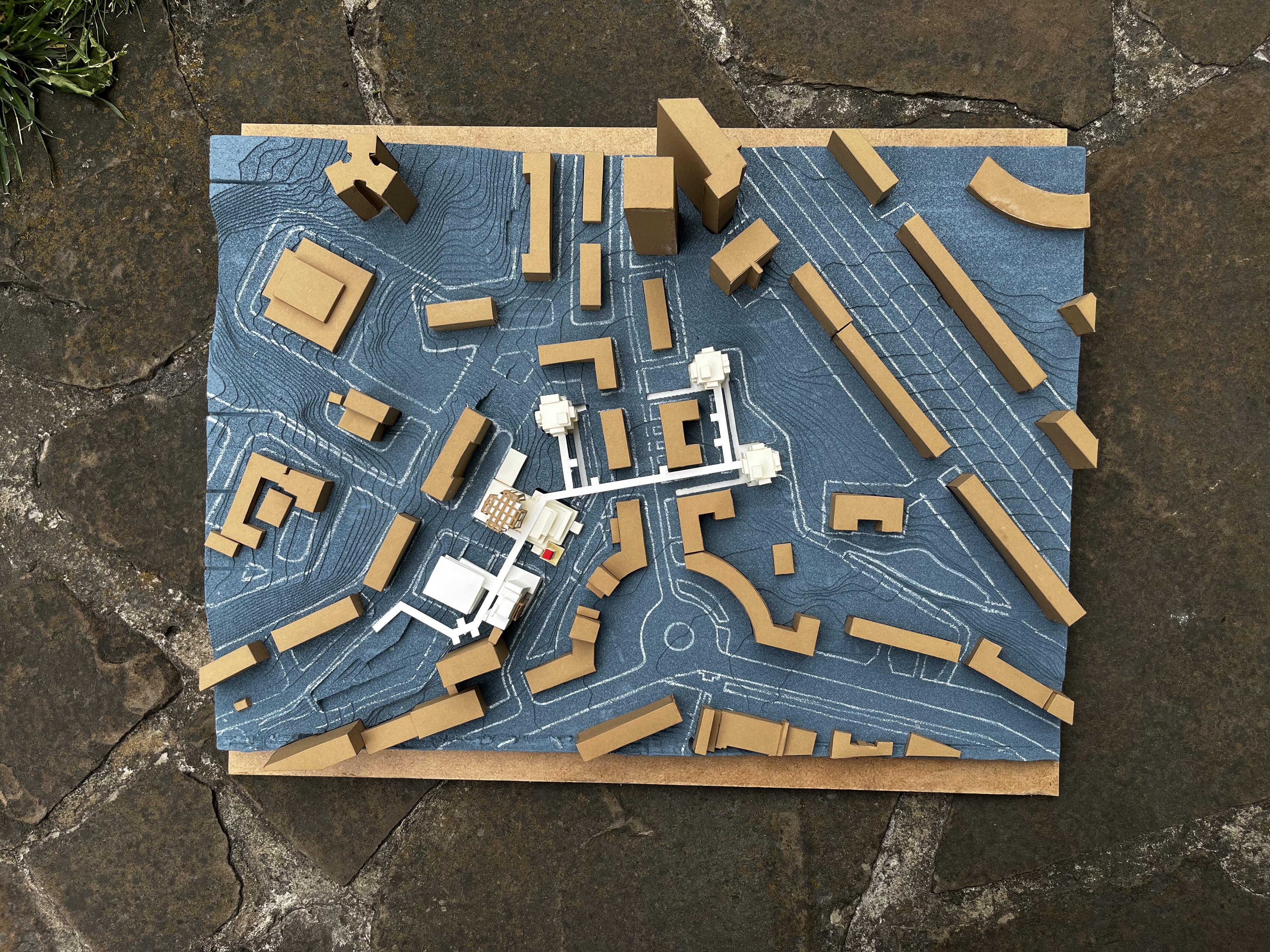
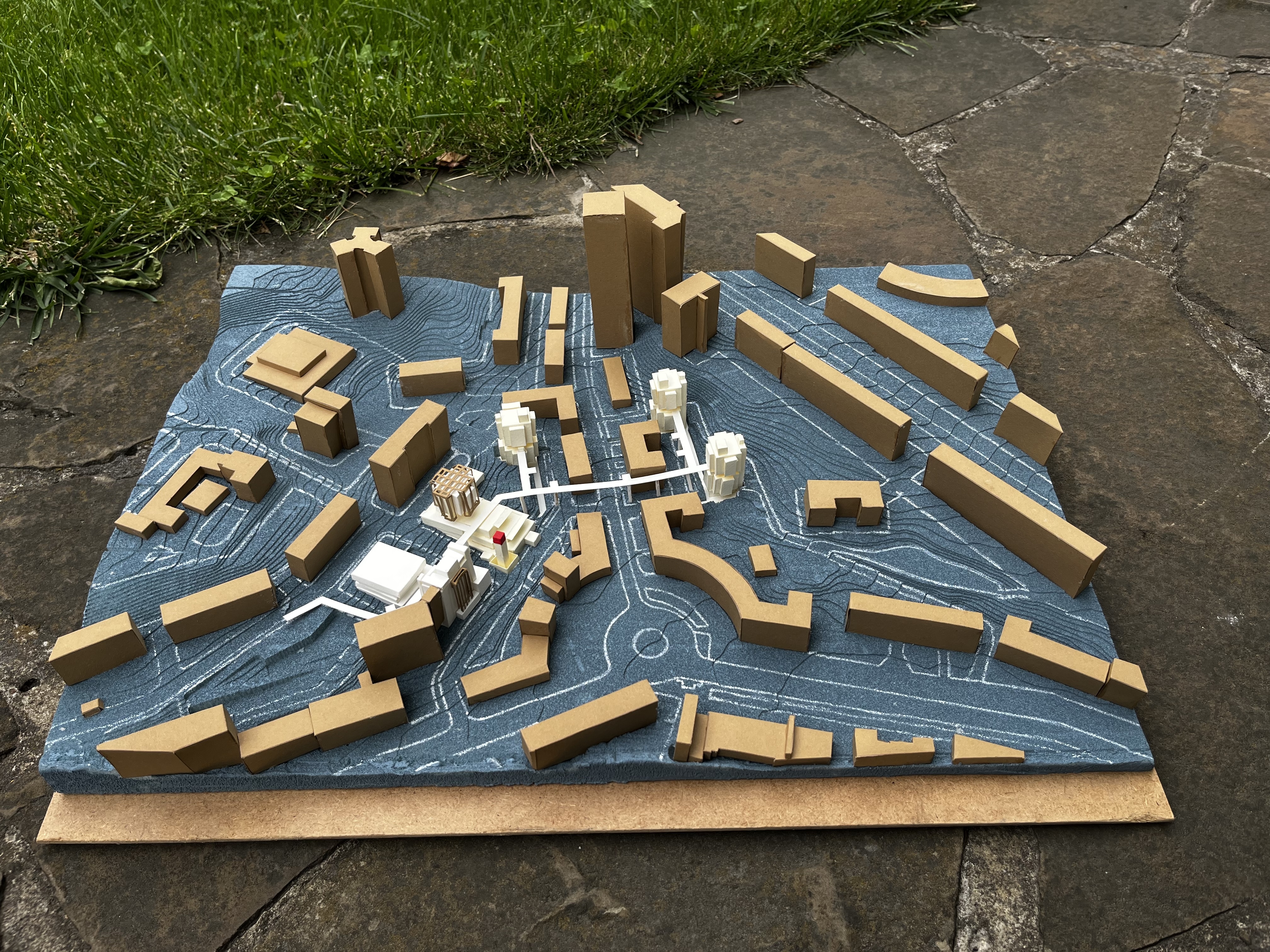
У третьому розділі представлено концептуальний проєкт інклюзивного багатофункціонального комплексу для людей з вадами зору на базі кластера УТОС у м. Києві, у якому продемонстровано результати проведеного дослідження. Прийняті архітектурно-планувальні рішення поєднують реконструкцію існуючих будівель із новим будівництвом, забезпечуючи високий рівень доступності, зручність навігації та просторову автономність користувачів.
The introduction substantiates the relevance of the research topic, caused by the growing number of people with visual impairments (in particular, as a result of the full-scale war), and defines the goal, tasks, object, and subject of the work. The need for a transition to the social model of disability and the creation of a space that compensates for the lack of vision through multisensory perception is outlined.
The first chapter considers the theoretical and regulatory foundations for forming an architectural environment for people with visual impairments, and analyzes the domestic and international experience in designing and operating inclusive buildings. The main shortcomings of current regulations are identified, and the necessity of applying a multisensory approach to architectural form-making is substantiated.
The second chapter defines the architectural and planning principles and the specifics of the functional zoning of buildings for users with visual impairments. The features of implementing multisensory (tactile, acoustic, olfactory) and visual orientation and navigation aids are investigated, and ergonomic requirements for ensuring the safety and effective evacuation of users are elaborated.
The third chapter presents a conceptual project of an inclusive multifunctional complex for visually impaired people based on the UTOS cluster in Kyiv, which demonstrates the results of the conducted research. The adopted architectural and planning solutions combine the reconstruction of existing buildings with new construction, ensuring a high level of accessibility, ease of navigation, and spatial autonomy of users.