Репозиторий Национальной академии изобразительного искусства и архитектуры
Адаптація промислової архітектури під громадські центри
- Главная
- →
- НАОМА
- →
- Факультет архітектури
- →
- Кваліфікаційні роботи другого (магістерського) рівня вищої освіти
- →
- Просмотр элемента
JavaScript is disabled for your browser. Some features of this site may not work without it.
Адаптація промислової архітектури під громадські центри
Слободенюк, Світлана Сергіївна; Slobodeniuk, Svitlana Serhiivna
Дата:
2026
Аннотации:
Робота присвячена формуванню сучасної архітектурної моделі громадського центру на основі адаптації промислового комплексу, а також виявленню та систематизації основних принципів і ключових архітектурних прийомів адаптації промислової архітектури до громадських осередків на основі аналізу теоретичних напрацювань та практичного досвіду. Об’єктом дослідження є громадські центри як тип архітектурного середовища, а предметом дослідження — принципи та прийоми адаптації промислових комплексів до громадських центрів. У роботі використано такі методи дослідження, як аналіз наукових і теоретичних джерел, порівняльний аналіз світових та українських проєктних прикладів, узагальнення виявлених закономірностей, а також їх використання на обраній ділянці проєктування з проведенням її містобудівного аналізу.
У кваліфікаційному магістерському дослідженні на тему «Адаптація промислової архітектури під громадські центри» розглянуто проблематику адаптації промислових будівель, комплексів і територій у контексті формування сучасних громадських багатофункціональних центрів. Тема є актуальною в контексті сучасної архітектурної практики та слугує широким полем для роздумів і архітектурних експериментів. Її значущість зумовлена тим, що будівлі дедалі частіше розглядаються не лише як статичні фізичні структури, а як динамічні середовища, здатні трансформуватися відповідно до нових соціальних, культурних і функціональних потреб. Зростає увага до контекстуальної архітектури, оскільки будівлі можуть зберігати й репрезентувати символи спільної історії та локального культурного надбання, інтегруючи їх в об’ємно-просторову та внутрішньо-планувальну структуру. Громадські центри у цих умовах набувають більш складного, гнучкого й багатогранного характеру, реагуючи на мінливі суспільні запити.
Дослідження складається зі вступу, трьох основних розділів, висновків, списку використаних джерел і проєктної частини.
У вступі подано загальну характеристику: коротко розглянуто тенденції до формування запиту на громадські осередки, зокрема в контексті адаптації промислових територій, визначено мету, завдання, об єкт, предмет дослідження, висвітлено актуальність теми кваліфікаційної роботи та розглянуто теперішній стан дослідженості у українському та міжнародному науковому полі. Узасаднено наукову новизну, практичну значущість та наведено структуру дослідження.
У І розділі «Аналіз теоретичних та практичних напрацювань на тему адаптації проммислових територій під громадські центри» розглянуто теоретичні та практичні напрацювання з теми адаптації промислових територій до громадських осередків, проаналізовано міжнародний і український досвід ревіталізації.
У ІІ розділі «Принципи та прийоми адаптації промислових будівель під громадські центри» виявлено та систематизовано основні принципи й прийоми адаптації промислових будівель до громадських центрів.
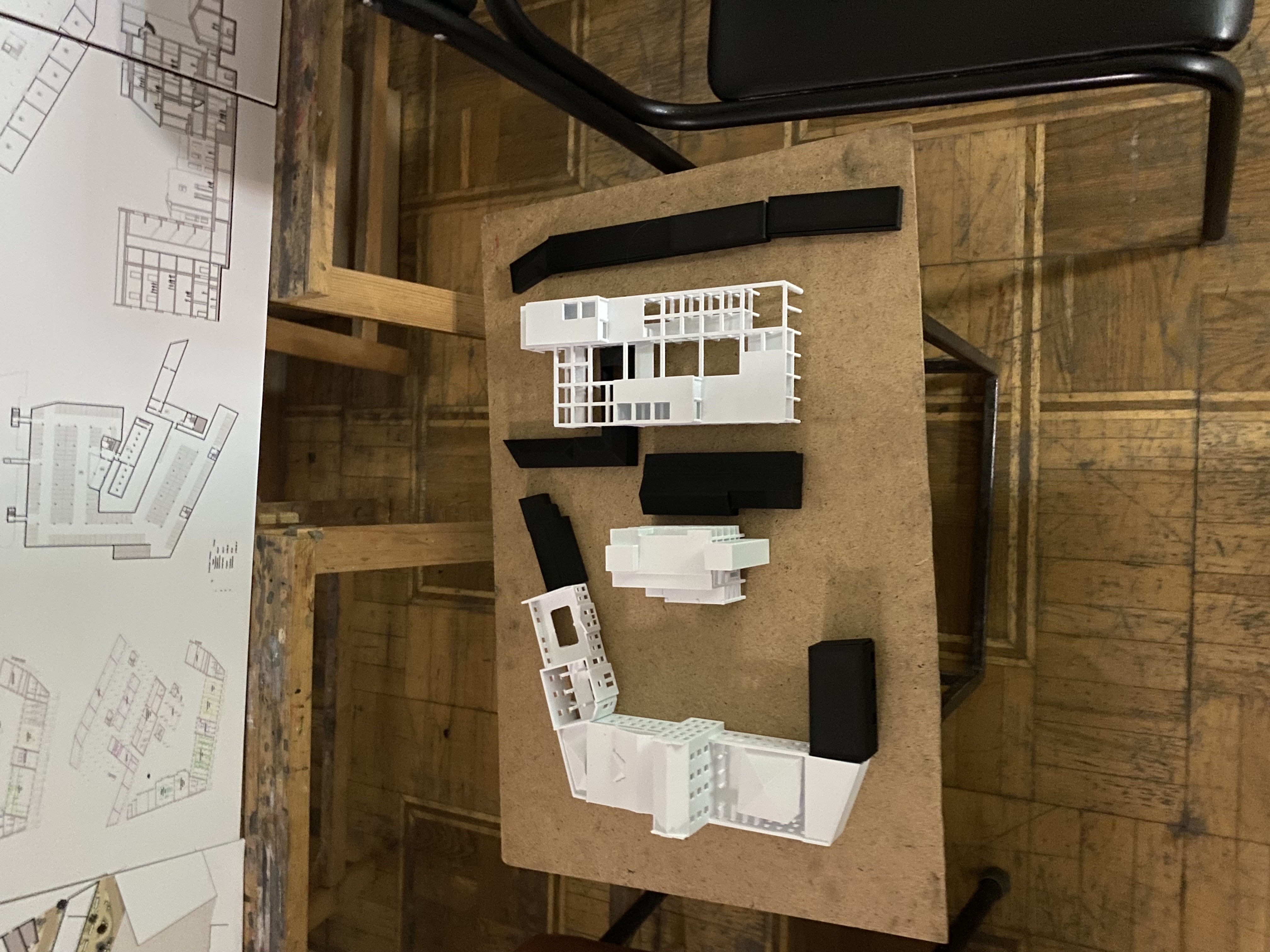
У ІІІ розділі «Використання виведених принципів та прийомів у проектній частині» розглянуто застосування виведених принципів і прийомів у проєктній частині на прикладі громадського центру на вул. Кудрявській у Шевченківському районі м. Києва.
У результаті дослідження визначено, що адаптація промислової архітектури до громадських центрів ґрунтується на поєднанні основних принципів збереження автентичності, функціональної гнучкості, сталості, доступності та інтеграції до міської тканини. На основі аналізу реалізованих прикладів систематизовано ключові архітектурні прийоми, релевантні для роботи з історичними промисловими комплексами, та апробовано їх у проєктній пропозиції громадського центру на території колишнього винзаводу на Кудрявській вулиці у місті Київ. Практична цінність роботи полягає в можливості апробації виявлених принципів і прийомів у майбутньому проєктуванні об’єктів ревіталізації в умовах історичних промислових територій. The work is devoted to the formation of a contemporary architectural model of a community centre based on the adaptation of an industrial complex, as well as the identification and systematisation of the main principles and key architectural techniques for adapting industrial architecture to community centres, based on an analysis of theoretical developments and practical experience. The object of the study is community centres as a type of architectural environment, and the subject of the study is the principles and techniques for adapting industrial complexes into community centres. The study employs research methods such as the analysis of scientific and theoretical sources, a comparative analysis of international and Ukrainian design examples, the generalisation of identified patterns, and their application to a selected design site, accompanied by an urban planning analysis.
This Master’s thesis, entitled ‘Adaptation of Industrial Architecture for Community Centres’, examines the challenges of adapting industrial buildings, complexes and sites in the context of creating modern, multifunctional community centres. The topic is relevant in the context of contemporary architectural practice and provides a broad scope for reflection and architectural experimentation. Its significance stems from the fact that buildings are increasingly viewed not merely as static physical structures, but as dynamic environments capable of transforming in response to new social, cultural and functional needs. There is growing attention to contextual architecture, as buildings can preserve and represent symbols of shared history and local cultural heritage, integrating them into the spatial and interior layout. In these conditions, community centres are taking on a more complex, flexible and multifaceted character, responding to changing social demands.
The study consists of an introduction, three main chapters, conclusions, a list of references and a project section.
The introduction provides a general overview: it briefly examines trends in the development of demand for community centres, particularly in the context of the regeneration of industrial areas; it defines the aim, objectives, scope and subject of the study; it highlights the relevance of the thesis topic; and it reviews the current state of research in the Ukrainian and international academic fields. The scientific novelty and practical significance are substantiated, and the structure of the study is outlined.
Chapter I, ‘Analysis of Theoretical and Practical Developments on the Adaptation of Industrial Areas into Community Centres’, examines theoretical and practical developments regarding the adaptation of industrial areas into community centres and analyses international and Ukrainian experience in revitalisation.
Chapter II, ‘Principles and methods for adapting industrial buildings into community centres’, identifies and systematises the main principles and methods for adapting industrial buildings into community centres.
Chapter III, ‘Application of the Derived Principles and Techniques in the Design Phase’, examines the application of the derived principles and techniques in the design phase using the example of a community centre on Kudriavska Street in the Shevchenkivskyi district of Kyiv.
The research has determined that the adaptation of industrial architecture into community centres is based on a combination of the fundamental principles of preserving authenticity, functional flexibility, sustainability, accessibility and integration into the urban fabric. Based on an analysis of implemented examples, key architectural techniques relevant to working with historic industrial complexes have been systematised and tested in a design proposal for a community centre on the site of a former winery on Kudriavska Street in Kyiv. The practical value of this work lies in the opportunity to apply the identified principles and techniques in future designs for revitalisation projects within historic industrial areas.
Файлы в этом документе

Данный элемент включен в следующие коллекции
Поиск в DSpace
Просмотр
-
Весь DSpace
-
Эта коллекция